Showing posts with label Vagrants. Show all posts

Sunday, April 24, 2011

Oh those ears


Via.


I'm close to four weeks late in hearing it, but dig this short NPR feature on the Vagrants by Ed Ward (thanks to my buddy Efram for the link).  And pick up their Light in the Attic LP--totally worth it even if you've already got the old Great Lost Vagrants Album.

Friday, June 25, 2010

1969 Ads: Ungano's, Part 1

Selected Voice ads for Ungano's from January to June, 1969. They advertised just about every week, and I think I got all of 'em except for the issues missing from the archive. (I split the year into two parts only because the Blogger editor can get a little unwieldy if you upload too many images into one post.)


1/9/69 issue.

1/16/69 issue.


1/30/69 issue, Dom-free.


2/6/69 issue--Mitch Ryder had left them by that point IIRC...


Also 2/6/69, accompanied by one for some Upper East Side place called Geordie's Apple Pie.


3/6/69 issue.


3/20/69 issue.


4/3/69 issue.


4/10/69 issue.


5/1/69 issue.


5/8/69 issue.


5/15/69 issue.


5/22/69 issue.


5/29/69 issue.


6/5/69 issue.


6/12/69 issue.


6/19/69 issue.


6/26/69 issue--plus bonus nearby "Westhampton Rock Festival" ad.

Friday, May 28, 2010

Muni-ficent moss-gathering

SCOTT MUNI'S ROLLING STONE--304 E. 48th Street, near Second Avenue. Full disclosure: Scott Muni is one of the very few music biz/radio legends that I've personally encountered--but not in the way a fangirl-type would typically like to interact with someone of his stature. Back in the early '90s I did an internship at WNEW-FM--an enjoyable experience, but one which disavowed me of any notion that I was cut out for a career in commercial media. (I understand the station is now defunct on the FM dial, but has been resuscitated via HD2 and the internet.) I can recall being told on the very first day, "Don't talk to Scott, he doesn't like interns." So I never did, and I'd kinda cower and give him a wide berth if I ever happened to pass him in the hallways. I did get sent downtown to Venus Records a few times to pick up some imports for his "Things From England" segments, but dealt only with his very nice secretary in those instances.

It's not as if I ever would have approached him anyway--I'm a rather shy, "don't speak unless spoken to" type, especially around "celebs." But if he'd deigned to give me the time of day--and I must say, everyone else there, including the other on-air talent, did so willingly and welcomingly--he'd have known I probably had more knowledge of and respect for his career than your typical intern. And what was his problem anyway--did he think we were just some troublesome flaming hookie-dookie whippersnappers out to usurp his position as the Professor of Rock & Roll?

So although I've long had his nightclub on my list of places to investigate, given my understandably tainted perceptions of the man, perhaps I've subconsciously been a little reluctant to fully engage in that endeavor. But I happened to get a little note from Left Banke bassist/international disc-jockeying man of mystery Tom Finn a few days ago, which helped encourage the pursuit. (Um, squee!!??!! Sorry, I don't mean to come across as an inveterate name-dropper...we've merely chatted a few times on facebook ever since he and leftbanke.nu webmistress Charlemagne started a fab Left Banke facebook page.) "Hey, I hear you're into New York sixties clubs. Ever hear of a place called the Rolling Stone?" I can only guess he must have seen the Wolfgang's Vault article and noticed I'd left it out--quite inadvertently, I assure you. But enough of my personal palaver...clearly this was a sign from the universe that it was time to take on Scottso's domain!


Unfortunately, details about the club have not been abundantly forthcoming--and the fact that it shares the name of a certain ridiculously well-exposed band didn't make the search any easier. I was initially skeptical about how deep Muni's financial interests in it were, but since he was somewhat between radio gigs at the time, it seems plausible that he could have been the actual owner, at least in part. According to his wikipedia entry (corroborated by a musicradio77.com article on the WMCA Good Guys), "In 1965, Muni left WABC and ran the Rolling Stone Night Club while doing occasional fill-in work for WMCA." And in a fine tribute to Muni from areuonsomething.com, Ray D'Ariano writes:


Muni left WA-Beatle-C. Over the next few years Muni did overnight fill-in work at WMCA and he found another night shift gig. On the New York rock scene it was the era of the Hammond B3 organ and the blue-eyed soul bands made popular by The Rascals. The Hassles featuring a young Billy Joel, The Pigeons who would become famous as The Vanilla Fudge, and The Vagrants with guitarist Leslie West played at a slew of rock clubs known as discotheques. There was The Phone Booth, Cheetah, Ungano's, and a club on East 48th where The Vagrants were the house band, Scott Muni's Rolling Stone.

Muni was a Scotch aficionado who had the ability to function flawlessly even after imbibing. One evening there was a brawl on the street out front. He intervened and discouraged the participants from continuing their aggressive behavior so close to his establishment. He did it with fewer words than the last sentence. A short while later he felt ill. He went home early only to twist and turn all night with a harsh pain in his lower back. The ex-Marine toughed it out, but was shaken the next morning when he awoke to see his sheets covered in blood. During a sober investigation he realized he had been stabbed while breaking up the fight. Later that night he was back on stage with the Vagrants. It was only rock and roll.


I've pored over the streetsyoucrossed bookshelf in search of equally atmospheric references, but so far the literature has yielded only two minuscule mentions.


From Andy Warhol's and Pat Hackett's Popism: The Warhol Sixties (NY: Harcourt Brace Jovanovich, 1980) From the Gymnasium we usually went on to a discotheque called the Rolling Stone, and then to Trude Heller's new place on Broadway and 49th, a few blocks down from Cheetah--"Sweet Soul Music" was the big song at all the clubs--and soon after this, Salvation opened down on Sheridan Square, so there were suddenly all these new places to go.


[Wait--there was a second Trude Heller's uptown?] [UPDATE 5/31/2010: Apparently so. I just saw a tidbit about it in the April 27, 1967 issue of the Village Voice: "And uptown, Trude Heller opened a new discotheque. Most amazingly dressed was six foot plus model Donyale Luna." A pic of her dress was printed on the front page but the reproduction in the Google archives is not very clear.]


And from Clay Cole's Sh-Boom: The Explosion of Rock & Roll (NY: Morgan James, 2009): I was told when I was auditioning dancers, I rejected both Geri Miller and Goldie Hawn. Geri was now a go-go girl at the Rolling Stone club, the girl with her legs in the air on its famous swing. Geri was overly ripe at a time when the Twiggy-look was all the rage...As Dominique, she became one of Andy Warhol's underground film stars, then a super-groupie, a topless dancer and finally a porn star. [Hey, she was in a band for a spell too y'know! Not quite finished with this book yet, but if I come across more R.S. references in it I'll let you know.]


A couple of tasty gossip column items from 1965 turned up via the Google News Archives. I jotted them down verbatim, but didn't copy the links when I first found them. As of this writing the articles are not turning up, so I cannot back up these quotes with visual proof and linkage...but hey, would I lie to you about this stuff?


Earl Wilson, N.Y. Post, September 17, 1965 (as syndicated to another city's Herald-Tribune): The washroom at the Rolling Stone discotheque features a blackboard and chalk. The sign reads, "We don't wish to repress creative talent, so if you must write, write here."

Dorothy Kilgallen, N.Y. Journal-American, October 12, 1965 (as syndicated to the Toledo Blade): Disc jockey Scott Muni, who scored with the Rolling Stone discotheque, has a table set aside for his colleagues. It's equipped with the latest music trade publications, a list of the top 40 records, and a pretty girl whose job is to see that their requests are played first. [As a What's My Line? fanatic, I can't help but notice this column was published less than a month before Kilgallen's mystery-shrouded death.]


Since Tom Finn inspired this post, I asked him if I could pick his brain for Rolling Stone synapses, and he graciously obliged.

I first went to the Rolling Stone with Mick Wexler who was the writer, singer and guitarist for The Magic Plants. Warren Sherhorst and I signed on after the record "I'm A Nothing." Anyway Mick was a Mick Jagger imposter. Back in late '65 a lot of people didn't know what Jagger looked like. So we went to The Rolling Stone. Mick was wearing a big pair of sunglasses at night in a already darkened nightclub, and he sported a heavy Cockney accent...Everybody knew he wasn't Jagger, but he insisted anyway. So I saw The Vagrants perform, and WOW! What a production! I had never heard a group play with so much volume and production. I was impressed--I didn't think they were a recording type of group, but live they were amazing. So when we were leaving Mick tripped over a little rise on the floor, and fell on his face. I remember people saying what's the matter Mickey Boy. They ridiculed him. But he deserved it. Imagine dark glasses. I thought The Club was pretty big compared to Ondine or The Scene. It looked like a fancy type of place.


Well, the Vagrants seem as appropriate a band as any to head our short list of R.S. notables. I haven't tracked down any dates, but I gather this was their main Manhattan showplace in '65 and '66. Check out pages 3 and 4 of the photo gallery on the splendid thevagrants.net for some visual evidence. I won't steal those pics, but I'm compelled to purloin their copy of an R.S. flyer.


The Yardbirds played there on September 17, 1965--the club's biggest international booking that I know of. (Pic came from stratcollector.com.)


I was hoping the Billboard archives would hold at least as many items on the Rolling Stone as it did for the Phone Booth, but I managed to find only two: for the Seven of Us ("a new vocal combo") in the November 6, 1965 issue, and for the Bit'a Sweet ("a new rock-soul group") in the June 4, 1966 one.

A British Beach Boys site reveals this tidbit involving '70s B.B. pianist Carlos Munoz: "From 1965 to 1968, Muñoz led a rock band with Jorge Calderón called The Living End, a.k.a. Space (jazz-rock band); they were the house band at Scott Muni´s Rolling Stone and released a single album, Space (Capitol Records)." (It's a long shot, but I wonder if Carlos was at all related to Scott, whose real name was Donald Allen Munoz.)

In an interview with Ugly Things editor-in-chief Mike Stax, Peter Sando discusses how his band the Rahgoos fit the scene: "Most of the uptown Discotheques were dominated by Rascal-clone bands like the Rich Kids, the Vagrants, and the Pilgrims. We were not immune to that as we converted to a B3 sound when we played at the Rolling Stone and Phone Booth...but as the band progressed, we were falling into the Rascal sound too much." Lineup changes and a gradual evolution toward psychedelia led the band to change their name to Gandalf--apparently inspired by a copy of The Hobbit that drummer David Bauer happened to be reading one night backstage at the Rolling Stone.

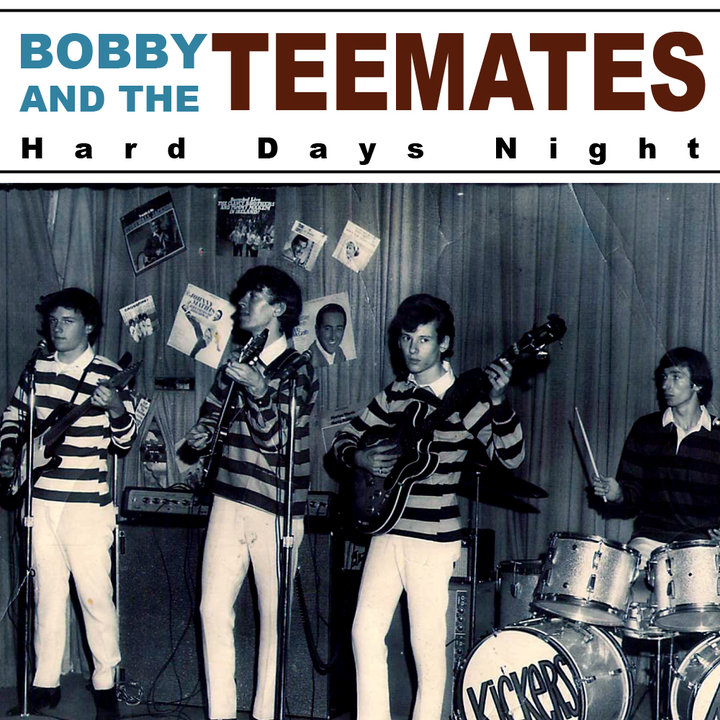
60sgaragebands.com offers profiles on two bands who played there, the Teemates (later renamed the Kickers after their second manager's involvement with the N.Y. Jets) and a Dallas band called Truth. And Mike Patalano of the Others--famed among caveteens for "Can't Stand This Love, Goodbye"--gave some nice recollections to Fancy Magazine. (Be sure to check out the great pic of the club's front sign: "Come in tux or tights and give our girls in the swings a push...two dance floors, no cover, no minimum.")

Bob Marshall became our manager. He got us a gig at the Rolling Stone Discotheque in NYC at the corner of 48th and 2nd Ave. that summer of 65. We were the house band and played six nights a week, half hour on, half hour off, 9 pm to 3am. We all got paid a couple hundred dollars a week. We had lines of people around the block for hours waiting to get in. It was owned by Scott Muni. He would stop in and introduce us to the crowd every once in a while. We had a blast—Met David Winters, the dancer from West Side Story, and Gene Pitney there. There were go-go girls, and a swing. Afterwards we would be invited to parties all over the city. It was wild.

Apparently there is now a karaoke bar and a parking garage at the address. But folks, I'm afraid that's about all the info I've been able to find so far! Please don't hesitate to leave a comment if you have any recollections or facts of your own to share--this skimpy post could sure use 'em!


UPDATE 9/24/2010:  Bob Polhemus of Bobby and the Teemates sent this great shot of them playing at Scott Muni's Rolling Stone. "His club the Rolling Stone was one of the hottest gigs I ever played...The place was like a celebrity gathering with every soon to be legend of rock visiting...The picture is us The Teemates--Me second from left. We were the house band there the first week he opened the club. We were there a month followed by the Vagrants, with the Yardbirds doing a set every now and then along with Eric Burdon, Chas, The Gentrys. Opening night there was a line stretching up 48th Street to Second Avenue...Barry Oslander was the Sound Engineer there, and co-produced our LP "Jet Set Dance"...This was our last week there. Scott was furious we gave up our Beatles squeaky-clean look for these striped shirts. Cancelled our contract--Vagrants followed...The picture above was taken shortly after the Teemates changed their name under new management with a guy by the name of Bill Blackburn who was associated with the New York Jets--thus the name 'Kickers." I believe this was our last week at Scott's, after which the Vagrants or another Band followed us in."


Thursday, February 08, 2007

Where the Action Was

Venturing outside city limits for this one. I'm a Queens girl after all, firmly entrenched between the ultimate urbia and the ultimate suburbia, and equally influenced by both extremes. I began researching this entry in several fits and starts last year, but frequent life's-aggravation interruptions kept me from finishing it until now.


ACTION HOUSE—50 Austin Boulevard, Island Park, New York. Few suburban rock clubs were ever so accurately named. As Lenny Kaye wrote in his essay "New York in the Sixties": "[T]he real home of the Long Island sound, as it came to be known, was a large club outside the city in Island Park called the Action House, where groups like the Vagrants (featuring guitarist Leslie West), the Rich Kids, the Hassles (with a young Billy Joel behind the Hammond) and the Vanilla Fudge indulged in all manner of baroque showmanship, complete with drummers twirling sticks, heavily-vibratoed voices, ornamental starts and melodramatic stops." In operation from the mid-'60s through the early-'70s, the club also hosted many of the era's biggest international touring acts.

It was owned by Phil Basile, described in this New York magazine article as “the all-time classic Island club owner. A reputed Luchese crime-family member, Basile operated several famous L.I. clubs—the Action House, Speaks, Channel 80, Industry—three of which were the same club (on Austin Boulevard) with different names.” He also dealt in artist and tour management. The Action House itself changed names, ca. mid-1970, to the Rock Pile. But unfortunately, I haven’t located many concrete details on the history, appearance, or atmosphere of either incarnation of the joint. This quote, from an otherwise terrific article on L.I. rock and roll entitled “Beaches, Bars and B-3s,” is about as colorful a description as I’ve been able to find:

Throughout the '60s, the party would hang a left up Long Beach Boulevard to The Action House, so aptly dubbed. Mike Ricciardella, drummer for The Illusion, described it, "The Action House was a wild place back then. The bouncers were nuts and very wild! The drug scene was wild! The chick scene was wild! The parking lot scene was the wildest, though. Really nuts. The parking lot was the place where the crowd hung out and got high. Inside was rock'n'roll, outside was Fantasyland."

While wild is certainly among the most evocative of ‘60s descriptors, I need more to go on than that! If you've got any good memories to share, I implore you to leave a comment. Meanwhile, it's a good thing the list of legends associated with the Action House is long and stellar enough to speak for itself.


First, some locals. I wish all ‘60s-band websites were as comprehensive and memorabilia-rich as thevagrants.net. Feast your “Oh Those Eyes” on the gallery pages in particular, which feature an incredible array of band photos and gig ads/posters/flyers. The two Action House ads at the site also list gigs for Wilson Pickett, the Outsiders, the 5 Illusions (precursors to the aforementioned Illusion), the Young Rascals, and Mitch Ryder & the Detroit Wheels.


Be sure to check out the captions for the Vagrants' live photos, which reveal a treasure trove of obscure NYC and Long Island club names, including the Big Toe Au Go Go in the Bronx, Tempo Dance City and the Golden Note in Brooklyn, the El Patio Beach Club in Lido Beach, the Bustard Buzzard in Baldwin, the Mod in Mt. Sinai, and Danny Maser’s My House in Plainview (described as the “Home of ‘the Hassles’ featuring Billy Joel”). About the only names I recognized were Queensboro Community College, the Scene, Scott Muni’s Rolling Stone (304 E. 48th St. at Second Avenue), and Brooklyn’s Action City. Further info on any of these joints would be greatly appreciated! More Vagrants vittles are yours for the clicking.

Fortunately for all Action House aficionadoes, vanillafudge.com rivals thevagrants.net in scope. The Fudge were heavily influenced by the Vagrants, and are perhaps even more closely associated with the club than their forebears, as Phil Basile acted as their manager. Essential links include the Fudge Chronicles, a Mark Stein interview, a Vince Martell interview and bio, these George "Shadow" Morton interviews, and the Bandlog of Fudge gigs (including support dates for the Fifth Dimension, Moby Grape and Canned Heat at the AH). I'll poach only one quote pertaining to the AH, from the Mark Stein interview:

The Action House was like...the melting pot of Long Island. Everybody went there from all over the island, you know? Everybody hung out there, everybody rehearsed there, everybody met people there. Like I said, it was like the melting pot. T'he place was always packed. Every weekend there used to be one of the top bands playing there. From time to time there would be a record act there. It was a hell of a place they had going.

The Fudge played their original farewell gig at the AH on March 14, 1970. Tim Bogert and Carmine Appice soon formed Cactus, which in turn had their earliest gigs at the AH; at one of these, the other Fudgemeisters joined them onstage for an impromptu reunion jam.

Other local Action House/Rockpile regulars include the aforementioned Hassles and Rich Kids, the Bohemian Vendetta, Ohio transplants the Angry, the Hives, the Variations/Streetcorner Society, and Trux.

Now for a partial list of non-Islanders.


Actually, these guys were pretty local, and Lou Reed did grow up in Freeport. The Velvet Underground played at a party sponsored by Night Beat magazine called "Freak Out '66" on December 4 of that year. About the only other names I can make out on the flyer are those of M.C.'s Clay Cole and Scott Muni.

UPDATE 1/25/2013:  I recently obtained a larger version of a "Freak Out '66" flyer from a long-time Bomp buddy of mine named Michael L.


The Doors, June 16 and 17, 1967. As indicated in the ad above, these dates were in the middle of the band's residency at the Scene. According to a Doors fansite, "The Scene closes for three days during The Monterey Pop Festival and The Doors, who do not represent the peace and love image of the venue, are overlooked and not invited. Before the first show here Jim reportedly instructs the bartender to line up fifteen shots of Jack Daniel's, and then drinks them all, one after the other, just prior to taking the stage. As the show progresses Jim then asks the bartender to line up fifteen more and also drinks them. Jim is soon extremely drunk and obviously begins to show the signs but before he passes out he attempts to disrobe onstage! The band intervenes and the show, near conclusion, is ended abruptly. The next night, Sat. the 17th, is The Doors' shortest performance ever! At the start of the show an extremely hung over Jim Morrison places the microphone in his mouth and begins to make awful groaning sounds for a long period of time until the other members help him, once again, off stage. The Action House is primarily a dance club and the club's sound system soon takes over without much ado."

Moby Grape, September 11 and 22, 1967 (opening for Cream on the 22nd), and October 18, 1968

Country Joe and the Fish, an unspecified date in September, 1967 with the Vanilla Fudge and the Doughnuts.

Procol Harum, an unspecified date in the Fall of '67.

The Yardbirds, April 12-14, 1968.  UPDATE 1/25/2013:  Here's an amusing quote from Chris Dreja, which I recently saw in Light and Shade: Conversations with Jimmy Page:  "The people who ran the promotions, especially in America, were mainly mafia.  I remember playing Vanilla Fudge's club in Long Island and being introduced to truly menacing people who were eight feet tall, with chewed up ears and smashed-in faces, and had names like Vinnie."

The Mandala from Toronto, April 17, 1968. (Also June 10, 1967, according to the above ad showing the Doors' dates--though their name is misspelled as "The Mandella." I see the Blues Project is also listed on the ad for June 9 that same week.)

Rhinoceros, June 27, August 8-9, and October 1, 1968.

I was unable to confirm a date for this, but the aforementioned Mike Ricciardella of the Illusion remembers the night they opened for Sly and the Family Stone at the AH as the best gig they ever did.

The Peter Green-era Fleetwood Mac, an undetermined date in January 1970.


The Faces, April 24-25 and October 24, 1970

Lifetime, May 8-9 and August 28, 1970.

Alice Cooper, September 9, 1970.

The Grateful Dead, with New Riders of the Purple Sage, November 9 and 10, 1970

Badfinger, May 7 and 8, 1971.

Mott the Hoople, May 28 (supporting Mandrill) and May 29 (supporting Hog Heaven), 1971.

Gary Lucas recalls seeing T.Rex and Humble Pie at the Rock Pile during the summer of '73.

As always, there are countless bands I'm leaving out, but hey, I can only spend so much time ferreting out these factoids. I'm not sure when the Rock Pile closed, but apparently the building was later used for another Basile-owned club called Speaks, where the early Twisted Sister often played. Not sure what's on the site now.

UPDATE 6/25/2010: Here are some 1969 Voice ads for the Action House.

UPDATE 3/15/2012:  Here is a revised and updated post on 1969 Action House ads.

UPDATE 1/25/2013:  Somehow I forgot to put links here for the posts I did on ads from 1970 and 1971.  Sadly, I couldn't find as many for 1967.

6/8/67 issue.

6/29/67 issue.

9/21/67 issue.


Here are a couple of pictures of the building during its Action House and Speaks periods, which were posted a few months ago on the "Long Island and New York City Places That Are No More" FB page.


And here's an ad for Pablo's Lights that I found in the 3/2/68 issue of Billboard.


Sunday, May 15, 2005

Flushing the Bowl

My husband and I usually stay at a certain Manhattan hotel when visiting NYC, but it's all booked up this week, so we have a reservation at a new Ramada in Corona, my real hometown--overlooking scenic Grand Central Parkway and Shea Stadium. I've got to spend lots of time with what's left of my family (my mother passed away recently), so it's more convenient for my pops anyway. The hotel's proximity to Flushing Meadows Park (more pics/info here, here and here) is prompting me to ponder past rock and roll action in the area. I'll start with a long-lost hotbed of hippiedom:


(Via The Bowery Boys.)
SINGER BOWL--At the northern edge of Flushing Meadows, near the Shea Stadium/Willets Point stop on the 7 train. The Singer Bowl was an open-air stadium built for the '64 World's Fair and apparently sponsored by the Singer sewing machine company. Seems it was used primarily for sporting events until the late '60s, when it became a major venue for big summer rock shows. Some notables who played there:
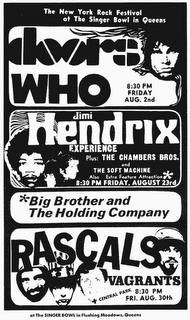


The Doors, with the Who and the Kangaroo as openers, performed on August 2, 1968--an event which caused a riot, though of course volatility was not uncommon at Doors gigs (or Who shows for that matter!). There's a ticket stub for sale here, and the Doors' setlist for the night can be read here.

[UPDATE 5/14/2010: Quite a bit of footage from the Doors show wound up in When You're Strange, as shown on PBS the other night. Not so much of the band performing, but you do get to see Morrison mingling with some people in the crowd before the show (including a guy selling Who programs), and of him backstage comforting a girl who got hit with a chair during the melee. I tried to see if there was more on youtube, but no dice...however, I did find audio of "Light My Fire," and of the Who's whole set.]

Janis Joplin with Big Brother and the Holding Company and the Jimi Hendrix Experience were the big draws on August 23, 1968. This show is often called the New York Rock Festival, but I've seen the Doors/Who show referred to as such also--perhaps this was an overall title for concerts at the Singer that summer. I'm not absolutely sure who else was on the bill, but it may have included the Soft Machine and the Chambers Brothers, if this guy's memories are correct. Audio and video of Hendrix's set has been well-circulated among Jimi-philes.

[Oddly, this August 23 date conflicts with a reference I found for a bill featuring Country Joe and the Fish, the Byrds, and the 1910 Fruitgum Company.]

[UPDATE 5/25/2012: I just found some vintage reviews and photos for this show at a French Hendrix fan forum.  And a lady who attended the show recently posted a couple of Janis snapshots at the "You Know Your [sic.] From Flushing" FB group.]

Two of the NYC-area's finest, The (Young) Rascals and the Vagrants, shared a bill there on August 30, 1968--here's a ticket stub.

The Singer Bowl Music Festival happened on July 13, 1969, and appears to have been the heaviest show in the stadium's history. I haven't seen a copy of the full bill, but based on various websites I've perused, it included the Edwin Hawkins Singers, Raven, Jethro Tull, Ten Years After, Vanilla Fudge, the Jeff Beck Group, and Led Zeppelin--plus a jam session (no late-'60s fest was complete without one) comprising various members of those last three bands.

Later that summer, Poco, the Chambers Brothers and Albert King shared a bill on August 23. On August 29-30, Zeppelin played the Bowl again, with support from Buddy Guy and Foreplay, which featured Larry Coryell, Cream's Jack Bruce, and Mitch Mitchell from the Hendrix Experience. The Jimmy Castor Bunch played the Bowl in the early '70s, but I can't confirm the date.

On July 4, 1973, the Bowl was rededicated as the Louis Armstrong Stadium, a fitting tribute to Corona's most famous longtime resident. A concert in honor of what would have been Satchmo's 73rd birthday was held there that summer (presumably on August 4, though I haven't confirmed the date), featuring Ella Fitzgerald, Dizzy Gillespie, Eubie Blake, Gene Krupa and other jazzbos. But the stadium's days as a music venue were numbered. In 1978, Armstrong Stadium was adapted for use as a tennis facility called the USTA National Tennis Center, and it became the new home of the U.S. Open (formerly held at the West Side Tennis Club in Forest Hills--a place with its own musical legacy, to be discussed in a future entry). Armstrong Stadium still stands today, albeit in a much-renovated form; it serves as a supplemental facility to the larger Arthur Ashe Stadium, which was built beside it in 1997. Thousands still flock to the area every summer--but instead of rock and roll, they're more likely to hear grunting tennis players, balls whacked against racquets, and the otherworldy hum of the Fuji blimp circling overhead.

I'll cover more of Flushing Meadows' musical happenings next time.

[UPDATE 5/23/2010: Why I failed to learn about or mention the important role that Gary Kurfirst played in all of this until just now is a mystery for the ages.]


[UPDATE 6/17/2020: Here's an ad for the 1969 season from the 6/5/69 issue of the Village Voice. It's incomplete, so I'll keep looking for revised versions of the ad in the archives.]

[UPDATE 3/15/2012:  Revised and updated post on Singer Bowl and NY Pavilion ads here.]